
Partisan
late 16th century
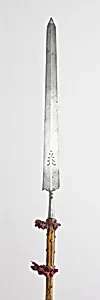
Medium
Steel, wood, brass, velvet weave, and attached tassel
Dimensions
H.: 280.7 cm (110 1/2 in.); Blade with Socket: H.: 94 cm (37 in.)
Classification
edged weapon-staff
Department
Applied Arts of Europe
Museum
Art Institute of Chicago
Accession Number
106488
Rights
Public Domain
Art Historical Context
This magnificent partisan from the late 16th century is a prime example of European craftsmanship in edged weapons. Fashioned by an unknown artisan, it features a steel blade affixed to a wooden shaft, embellished with brass, a velvet weave, and a tassel. At over 110 inches tall, with a 37-inch blade, its imposing size and decorative elements highlight its dual role as both a practical arm and a status symbol. In late 16th-century Europe, staff weapons like the partisan were vital for soldiers, offering extended reach in battle. The combination of steel, wood, brass, velvet, and tassel on this example implies it also served ceremonial purposes, illustrating how martial objects were often adorned to convey prestige and rank. Housed in the Art Institute of Chicago, this piece from the Applied Arts of Europe collection invites visitors to explore the intersection of warfare and artistry, where such weapons blended deadly function with impressive displays of skill.
About the Artist
Unknown
The artist designated as "Unknown" in our virtual museum's collection exemplifies a poignant chapter in art history: creators whose identities have faded into obscurity despite the enduring power of their work. With only one known artwork attributed to them in our holdings, this figure represents countless anonymous hands that shaped visual culture across centuries. Museums worldwide, including th...