
Peep-Show Print
mid-18th century
Classification
Department
Smithsonian Collection
Museum
Smithsonian American Art Museum
Credit
Gift of Eleanor and Sarah Hewitt
Accession Number
1931-94-379
Rights
Public Domain
About this artwork
Research in Progress
Art Historical Context
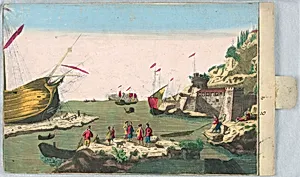
Step into the whimsical world of 18th-century optical entertainment with *Peep-Show Print a captivating artifact from the mid-1700s housed in the Smithsonian American Art. This enigmatic print, classified simply as a "print" with its medium yet to be fully identified, belongs to a delightful genre known as peep-show or vue d'optique. These were designed for viewing through a special peep-hole device or lens, which exaggerated perspective lines and vibrant colors to create a vivid, three-dimensional illusion—transforming flat paper into a window on distant scenes. Created anonymously during an era of burgeoning scientific curiosity and popular spectacle, such prints reflected the Enlightenment's fascination with optics and visual trickery. They brought exotic vistas, grand events, or everyday marvels to the masses, offering affordable thrills in taverns, markets, or homes. Donated as a gift from Eleanor and Sarah Hewitt to the Smithsonian Collection, this piece highlights the democratizing power of printmaking, bridging fine art and street entertainment. Though research continues to uncover its precise origins and techniques, *Peep-Show Print* invites us to ponder how everyday objects once sparked wonder. Imagine peering through a lens in a dimly lit room—what secrets might it reveal? A testament to ephemeral joys long past.
About the Artist
Unknown
The artist designated as "Unknown" in our virtual museum's collection exemplifies a poignant chapter in art history: creators whose identities have faded into obscurity despite the enduring power of their work. With only one known artwork attributed to them in our holdings, this figure represents countless anonymous hands that shaped visual culture across centuries. Museums worldwide, including th...