
Peep-Show Print
mid-18th century
Classification
Department
Smithsonian Collection
Museum
Smithsonian American Art Museum
Credit
Gift of Eleanor and Sarah Hewitt
Accession Number
1931-94-481
Rights
Public Domain
About this artwork
Research in Progress
Art Historical Context
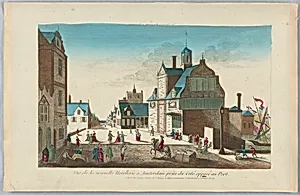
Step into the whimsical world of 18th-century optical entertainment with *Peep-Show Print*, a captivating example from the mid-1700s held in the Smithsonian American Art Museum's collection. As a classified print, this artwork belongs to a popular genre of peep-show or *vue d'optique* prints, specially designed engravings viewed through a simple device like a box with lenses. These created a thrilling illusion of depth and three-dimensionality, transforming flat images into immersive scenes for viewers peering through peepholes. Produced during the Enlightenment era, when curiosity-driven novelties flourished across Europe and early America, peep-show prints reflected the period's fascination with perspective, optics, and spectacle. Often hand-colored and featuring exaggerated foreshortening, they were affordable amusements sold at markets or to travelers, blending artistry with proto-scientific wonder. Though the exact medium and subject remain under research, this piece exemplifies how prints democratized visual experiences, bridging fine art and popular culture. Generously gifted by collectors Eleanor and Sarah Hewitt, *Peep-Show Print* invites us to ponder the ingenuity of anonymous creators. In the Smithsonian's holdings, it highlights the evolution of printmaking as both entertainment and innovation, reminding visitors of art's playful power to bend perception. (198 words)
About the Artist
Unknown
The artist designated as "Unknown" in our virtual museum's collection exemplifies a poignant chapter in art history: creators whose identities have faded into obscurity despite the enduring power of their work. With only one known artwork attributed to them in our holdings, this figure represents countless anonymous hands that shaped visual culture across centuries. Museums worldwide, including th...