
Piece
Unknown Artist
18th–19th century
Medium
Silk
Dimensions
6 1/4 x 6 3/4 in. (15.88 x 17.15 cm)
Classification
Textiles-Woven
Culture & Period
Japan · Edo (1615–1868)
Department
Asian Art
Museum
Metropolitan Museum of Art, New York, NY
Credit
Gift of Mr. and Mrs. H. O. Havemeyer, 1896
Accession Number
96.14.283
Rights
Public Domain
Art Historical Context
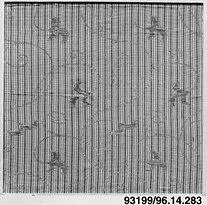
This exquisite silk textile fragment, dating to the 18th–19th century during Japan's Edo period (1615–1868), offers a glimpse into the refined artistry of the Tokugawa era. Created by an unknown artist, this small woven piece (6 1/4 x 6 3/4 in.) exemplifies the period's prosperity and cultural sophistication, when peace fostered advancements in crafts like textiles. Edo Japan was renowned for its vibrant merchant class, who commissioned luxurious fabrics for kimonos, obi sashes, and furnishings, blending functionality with aesthetic splendor. Woven from fine silk—a prized material symbolizing wealth and status—the textile highlights masterful Japanese weaving techniques. Artisans employed complex looms to create intricate patterns, often incorporating motifs from nature, mythology, or daily life, showcasing precision and innovation in jacquard-like structures long before Western industrialization. Such pieces were not mere cloth but cultural artifacts, reflecting social hierarchies and seasonal festivals. Generously gifted to the Metropolitan Museum of Art in 1896 by Mr. and Mrs. H. O. Havemeyer, prominent collectors of Asian art, this "Piece" invites visitors to appreciate the enduring legacy of Edo craftsmanship. Though modest in size, it whispers of Japan's textile golden age, where every thread wove stories of elegance and tradition.