
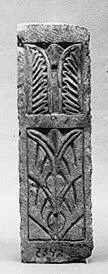
Pilaster with a Pattern of Leaves
Unknown Artist
3rd–12th century
Medium
Limestone; carved in relief
Classification
Sculpture
Department
Islamic Art
Museum
Metropolitan Museum of Art, New York, NY
Credit
Rogers Fund, 1910
Accession Number
10.175.90
Rights
Public Domain
Art Historical Context
Nestled in the Islamic Art collection at the Metropolitan Museum of Art, thisPilaster with a Pattern of Leaves* a striking example of architectural sculpture from the 3rd to 12th century. Crafted from limestone and carved in low relief, the pilaster—essentially a flattened column used to decorate walls—features an intricate leafy motif that evokes the lush, paradisiacal gardens celebrated in Islamic culture. Acquired through the Rogers Fund in 1910, it showcases the enduring craftsmanship of an unknown artist from a vast era spanning early Islamic dynasties. In Islamic art, vegetal patterns like these leaves held profound symbolic meaning, representing eternal life, abundance, and the divine beauty of nature, often avoiding human or animal figures in line with aniconic traditions. The relief technique allowed sculptors to create depth and shadow play on stone surfaces, enhancing architectural splendor in mosques, palaces, and tombs across the Islamic world—from Syria to Persia. This piece highlights limestone's popularity for its workability and weather resistance in monumental structures. Visitors will appreciate how this modest yet masterful fragment transports us to a time when art intertwined faith, nature, and ingenuity, inviting reflection on the timeless elegance of Islamic design.