
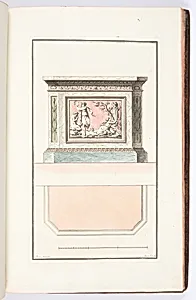
POELE dans le genre modern, à pans coupés, avec bas-relief, au choix des personnes
Medium
Classification
Department
Smithsonian Collection
Museum
Smithsonian American Art Museum
Credit
Purchased for the Museum by the Advisory Council
Accession Number
1921-6-407-14
Rights
Public Domain
About this artwork
Research in Progress
Art Historical Context
In the late 18th century, as France navigated the upheavals of the Revolution, innovative designs for everyday objects like stoves reflected a blend of practicality and emerging neoclassical elegance. Louis-Gustave Taraval, a French engraver (1738–1794), captured this spirit in his print *POELE dans le genre modern, à pans coupés, avec bas-relief, au choix des personnes* (ca. 1791). The title evokes a "modern-style stove with beveled panels and bas-relief," customizable to personal taste—a nod to the era's growing emphasis on individualized luxury amid social change. As a print from the Smithsonian American Art Museum's collection, this work exemplifies the period's use of engraving to disseminate architectural and decorative ideas. Taraval's precise lines would have allowed artisans across Europe to replicate the stove's ornate details, such as its sculpted bas-reliefs, blending functionality with artistic flair. Purchased for the museum by the Advisory Council, it highlights how prints bridged design innovation and mass production. Though research continues, this piece offers a window into Revolutionary France's domestic aspirations, where even hearthside essentials became canvases for refined taste. Visitors might imagine it warming a bourgeois salon, symbolizing resilience and refinement in turbulent times.