
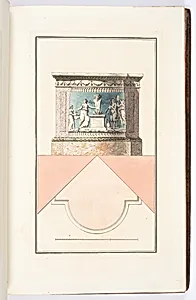
POELE formant encoignure et orné de figures en bas-reliefs
Classification
Department
Smithsonian Collection
Museum
Smithsonian American Art Museum
Credit
Purchased for the Museum by the Advisory Council
Accession Number
1921-6-407-10
Rights
Public Domain
About this artwork
Research in Progress
Art Historical Context
Louis-Gustave Taraval1738–1794), a prominent French engraver and ornamental designer, created *POELE formant enignure et orné de figures en basiefs* around 1791. This captures a neoclassical design for a corner stove—or *poêle*—that doubles as elegant furniture, adorned with sculptural bas-relief figures. Taraval's work reflects the refined decorative arts of late 18th-century France, blending functionality with artistry during the turbulent years of the Revolution. As a master of intricate engravings, Taraval specialized in architectural and furniture motifs, often disseminating innovative designs through prints for artisans and collectors. The bas-reliefs likely evoke classical mythology or allegorical themes, hallmarks of the neoclassical style that emphasized symmetry, antiquity-inspired ornamentation, and luxurious domestic objects. This piece highlights how stoves evolved from mere utilities into statement pieces, warming both body and salon. Housed in the Smithsonian American Art Museum's collection, acquired through the Advisory Council, the print offers a window into Revolutionary-era craftsmanship. Though research continues, it exemplifies Taraval's enduring influence on European design, bridging art and everyday life with timeless sophistication.