
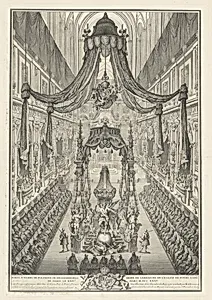
Pompe funèbre de Polixène de Hesse-Rhinfels
Medium
etching and engraving on laid paper
Dimensions
plate: 69.7 x 48.3 cm (27 7/16 x 19 in.) sheet: 83.4 x 62 cm (32 13/16 x 24 7/16 in.)
Classification
Department
CG-E
Museum
National Gallery of Art, Washington, D.C.
Credit
Gift of Ivan E. and Winifred Phillips in memory of Neil Phillips
Accession Number
1999.9.3
Rights
Public Domain
Art Historical Context
Visitors to the National Gallery of Art will find *Pompe funèbre de Polixène de Hesse-Rhinfels* (1735) a striking testament to 18th-century French printmaking. Created by Charles-Nicolas Cochin I (1688–1754), a master engraver from a renowned artistic dynasty, this large etching and engraving on laid paper captures the solemn grandeur of a noble funeral procession. Measuring an impressive plate size of 69.7 x 48.3 cm (with an even larger sheet), it invites viewers to immerse themselves in the opulent rituals of European aristocracy. Cochin I, active during the French Regency and early Rococo periods, excelled in reproductive prints that documented significant events for a wide audience. Etching allowed for fluid, expressive lines, while engraving provided the fine detail needed to render intricate details like mourners, coaches, and heraldic symbols. Such techniques made prints like this both affordable art objects and historical records, disseminating images of elite ceremonies beyond palace walls. This work commemorates Polyxena of Hesse-Rheinfels, a German noblewoman whose funeral in 1735 merited such elaborate depiction, reflecting the era's fascination with spectacle and mortality. A generous gift to the museum in memory of Neil Phillips, it highlights the cultural role of prints in preserving aristocratic legacy amid the shifting tastes toward Rococo elegance.