
Classification
Department
Smithsonian Collection
Museum
Smithsonian American Art Museum
Credit
Gift of Eleanor and Sarah Hewitt
Accession Number
1920-36-425
Rights
Public Domain
About this artwork
Research in Progress
Art Historical Context
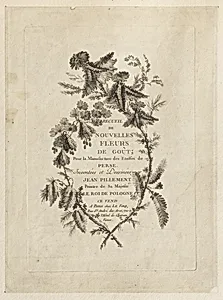
Jean-Baptiste Pillement (1728–1808), a versatile French artist of the Rococo era, was renowned his delicate landscapes, ornate floral motifs, and chinoiserie designs that captured the playful elegance of 18th-century European taste. Born in Lyon, Pillement traveled extensively Portugal, England, Poland, Russia, working for nobility and influencing decorative arts like tapestries and wallpapers. His prints, often etched or engraved, served as affordable ways to share his intricate, fantastical style—blending nature's whimsy with exotic flair—making him a bridge between fine art and popular design. This undated print from the Smithsonian American Art Museum exemplifies Pillement's mastery of printmaking techniques, which allowed for precise lines and subtle textures prized in the Rococo period. Though specifics of its medium and subject remain under research, it reflects his innovative approach to disseminating ornamental patterns that adorned homes and gardens across Europe. Donated by collectors Eleanor and Sarah Hewitt—pioneers in preserving design history—the work highlights the enduring appeal of Pillement's lighthearted, nature-inspired aesthetic. As part of the Smithsonian Collection, this piece invites ongoing discovery, reminding us how prints preserved the Rococo spirit amid shifting artistic tides toward Neoclassicism. A testament to Pillement's wanderlust and creativity, it offers visitors a glimpse into an era of refined fantasy.