
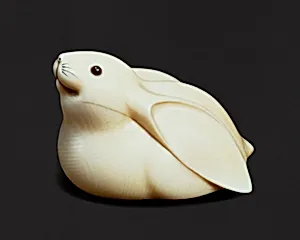
Rabbit
mid-19th century
Medium
Ivory
Dimensions
H. 1 in. (2.5 cm); W. 1 in. (2.5 cm); D. 1 3/4 in. (4.4 cm)
Classification
Netsuke
Culture & Period
Japan · Edo period (1615–1868)
Department
Asian Art
Museum
Metropolitan Museum of Art, New York, NY
Credit
Edward C. Moore Collection, Bequest of Edward C. Moore, 1891
Accession Number
91.1.975
Rights
Public Domain
Tags
Art Historical Context
This delightful ivory netsuke, titled *Rabbit* and carved by the skilled Japanese artist MitsuhiroŌhara in the mid-19th century, the exquisite craftsmanship of Japan's Edo period (16151868). Measuring just 1 inch high, wide, and 1¾ inches deep, this tiny sculpture captures a rabbit in a compact, three-dimensional form, perfect for practical role as a toggle. Netsuke like this secured small medicine boxes (inro) or pouches to a wearer's kimono sash, serving as both functional accessory and wearable art during an era when pockets were absent from traditional clothing. Carved from ivory—a prized medium for its smooth texture and ability to hold intricate details—Ōhara's work highlights the technical mastery of netsuke carvers, who transformed humble materials into lively, naturalistic figures. Rabbits were popular motifs in Japanese art, often evoking whimsy and good fortune. Part of the Metropolitan Museum of Art's Asian Art collection, this piece entered the museum through the bequest of Edward C. Moore in 1891, preserving a snapshot of Edo-era ingenuity and aesthetic refinement. Visitors, pause to admire how such a small object bridges utility and beauty, inviting a closer look at the rabbit's poised elegance.