
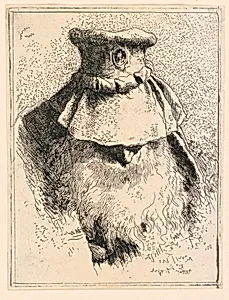
Raccolta di teste
Classification
figures
Department
Smithsonian Collection
Museum
Smithsonian American Art Museum
Credit
Smithsonian American Art Museum
Accession Number
1896-31-83
Rights
Public Domain
About this artwork
Research in Progress
Art Historical Context
Giovanni Domenico Tiepolo, gifted son of the renowned Venetian master Giambattista Tolo, created *Raccolta di teste ("Collection of Heads") 1770 and 1774. Working in the lush Rococo tradition of 18th-century Venice, specialized in lively drawings and paintings of expressive figures, often blending theatrical flair with keen observation. This artwork, classified as "figures" in the Smithsonian American Art's collection, likely comprises a series of head studies—a common practice among artists of the era to capture diverse expressions, poses, and character types for larger compositions. Produced during Tiepolo's mature years after his time at the Spanish court, *Raccolta di teste* reflects the artist's evolving style, which retained his father's decorative exuberance while hinting at emerging neoclassical restraint. Such collections were invaluable sketchbooks, honing skills in anatomy and emotion that informed frescoes, altarpieces, and capricci (fantastical scenes). Though the medium remains under study, these works showcase Tiepolo's mastery of fluid linework and dramatic lighting, hallmarks of Venetian draftsmanship. Housed in the Smithsonian American Art Museum, this piece invites visitors to appreciate the intimate, preparatory side of grand Baroque-Rococo art, bridging the gap between studio experimentation and public spectacle. Research continues to uncover more about its techniques and context, enriching our understanding of Tiepolo's prolific legacy.