
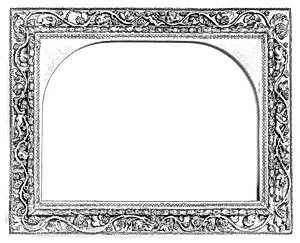
Reverse cassetta frame
Unknown Artist
1630–40
Medium
Oak
Dimensions
Overall: 38 3/4 × 54 5/16 in. (98.5 × 138 cm) Sight: 30 9/16 × 42 5/16 in. (77.6 × 107.5 cm) Rabbet: 31 7/8 × 43 11/16 in. (81 × 111 cm)
Classification
Frames
Culture
French, Lyon
Department
Robert Lehman Collection
Museum
Metropolitan Museum of Art, New York, NY
Credit
Robert Lehman Collection, 1975
Accession Number
1975.1.2229
Rights
Public Domain
Art Historical Context
Step into the elegant world of 17th-century French frame-making with this striking *Reverse cassetta frame* from Lyon, crafted between 1630 and 1640. Made of sturdy oak—a favored hardwood for its durability and fine grain—this frame measures an impressive 38¾ × 54⅜ inches overall, with a sight opening of 30½ × 42¼ inches. The "reverse cassetta" style refers to its distinctive profile: a deep, hollowed molding that reverses the traditional Italian cassetta form, creating a bold, architectural presence that draws the eye inward. Originating in Lyon, a thriving hub of craftsmanship during France's early Baroque era, this frame exemplifies the period's shift toward opulent, sculpted surrounds for paintings. Lyon’s woodworkers were renowned for such innovations, blending Italian influences with local flair to enhance altarpieces and portraits. Though the artist remains unknown, the frame's rabbet dimensions (31⅞ × 43¾ inches) reveal precise joinery tailored for securing canvases securely. Today, housed in the Metropolitan Museum of Art’s Robert Lehman Collection (acquired in 1975), this frame stands alone as a testament to the artistry of its support role. Once framing a lost masterpiece, it invites us to appreciate how such objects elevated paintings, transforming them into grand statements of culture and devotion.