
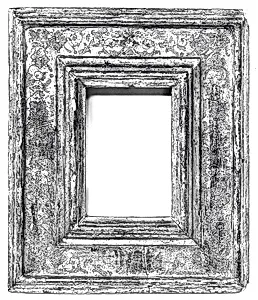
Reverse frame
Unknown Artist
style early 17th century, made 19th century
Medium
Pine and poplar.
Dimensions
Overall: 11 3/16 × 9 3/8 in. (28.4 × 23.8 cm) Sight: 4 15/16 × 3 5/16 in. (12.6 × 8.4 cm) Rabbet: 5 1/2 × 3 3/4 in. (14 × 9.6 cm)
Classification
Frames
Culture
Italian, Bologna
Department
Robert Lehman Collection
Museum
Metropolitan Museum of Art, New York, NY
Credit
Robert Lehman Collection, 1975
Accession Number
1975.1.2079
Rights
Public Domain
Art Historical Context
Nestled in the Robert Lehman Collection at The Metropolitan Museum of Art, "Reverse frame" exemplifies Bolognese craftsmanship from Italy. Crafted in the 19th century yet styled after early 17th-century designs, it measures 11 3/16 × 9 3/8 inches overall, with a sight size of just under 5 × 3 ½ inches—perfect for encasing small, intimate paintings or devotional works. Made from pine and poplar sturdy yet lightweight woods favored for their workability, the frame highlights the era's revival of Baroque opulence. In Bologna, a hub of artistic innovation during the 17th century, frames were not mere supports but integral to a painting's impact, enhancing illusionistic depth and drawing the eye. The "reverse" profile—likely referring to its distinctive ogee molding that curves inward—created dramatic shadows and a sense of recession, mirroring architectural elements in Bolognese palaces and churches. This 19th-century recreation reflects a Romantic nostalgia for Renaissance and Baroque grandeur, preserving techniques like precise joinery amid industrialization. Though by an unknown artist, its cultural importance lies in illuminating frame-making as high art. Visitors can appreciate how such frames elevated paintings, turning them into total aesthetic experiences in elite collections like Lehman's.