
Reverse Hogarth molding
Unknown Artist
1740–50
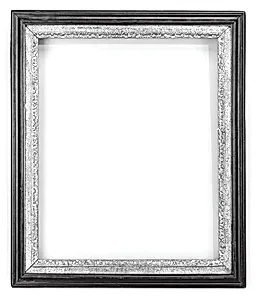
Medium
Pine back frame and feather keys; ebonized pearwood moldings
Dimensions
Overall: 23 7/16 × 19 15/16 in. (59.5 × 50.6 cm) Sight: 18 1/2 × 15 1/16 in. (47 × 38.3 cm) Rabbet: 19 9/16 × 16 in. (49.7 × 40.7 cm)
Classification
Frames
Culture
British (?)
Department
Robert Lehman Collection
Museum
Metropolitan Museum of Art, New York, NY
Credit
Robert Lehman Collection, 1975
Accession Number
1975.1.2540
Rights
Public Domain
Art Historical Context
Welcome to the Robert Lehman Collection at the Metropolitan Museum of Art where this exquisite *Reverse Hogarth molding* from 1740–50 invites a closer look at 18th-century British craftsmanship. Crafted by an unknown artist, likely from Britain, this frame measures 23 7/16 × 19 15/16 inches overall, with a sight size of 18 1/2 × 15 1/16 inches. Its pine back frame, secured with feather keys—traditional wooden pegs for sturdy joints—and ebonized pearwoodings, showcases the precision of period frame-making. The "Reverse Hogarth" design draws inspiration from William Hogarth's influential 1745 treatise *The Analysis of Beauty*, which popularized the sinuous S-curve, or "line of beauty," in decorative arts. This inverted variation reflects the Rococo taste for elegant, asymmetrical ornamentation during the mid-Georgian era, when frames were essential complements to portraits and landscapes, enhancing their visual drama. As a standalone object in the Met's collection (acquired in 1975), it highlights the artistry of woodworking and the evolution of picture framing from functional to sculptural. Ebonization, a faux-ebony finish, added a luxurious, exotic appeal, underscoring Britain's growing fascination with refined domestic interiors. A true gem for frame enthusiasts!