
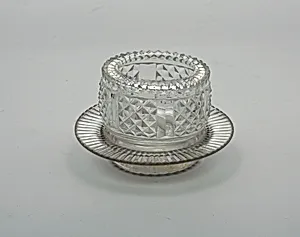
Salt stand
ca. 1820
Classification
glasswares
Department
Smithsonian Collection
Museum
Smithsonian American Art Museum
Credit
Bequest of Walter Phelps Warren
Accession Number
1986-61-231-a,b
Rights
Public Domain
About this artwork
Research in Progress
Art Historical Context
Step into the refined world of early 19th-century American dining this elegant *Salt Stand*, dating to around 1820. As a piece of glassware from the American Art Museum's collection—bequeathed by Walter Phelps Warren—this delicate table accessory held a place of honor at the dinner table, dispensing salt for seasoning. Though the artist remains unknown and research continues, its classification highlights the craftsmanship of the era's burgeoning glassmaking tradition. In the Federal period, salt stands like this one symbolized hospitality and status. Salt, a precious commodity preserved through trade and production, was often stored in ornate cellars or stands near the host's seat, reflecting both practicality and sophistication. American glassmakers, inspired by European imports yet adapting local techniques such as blown or pressed glass, created affordable yet beautiful wares that filled homes during a time of national growth and domestic refinement. Today, this unassuming yet intriguing object invites us to ponder everyday luxuries of the past. Ongoing research promises to uncover more about its origins, but it already speaks volumes about the artistry in America's early industrial age. (198 words)
About the Artist
Unknown
The artist designated as "Unknown" in our virtual museum's collection exemplifies a poignant chapter in art history: creators whose identities have faded into obscurity despite the enduring power of their work. With only one known artwork attributed to them in our holdings, this figure represents countless anonymous hands that shaped visual culture across centuries. Museums worldwide, including th...