
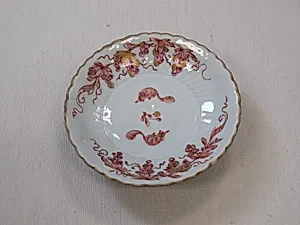
Saucer with squirrels and grape vines
Unknown Artist
late 18th century
Medium
Porcelain painted in overglaze polychrome enamels (Jingdezhen ware)
Dimensions
Diam. 4 1/4 in. (10.8 cm)
Classification
Ceramics
Culture & Period
China · Qing dynasty (1644–1911)
Department
Asian Art
Museum
Metropolitan Museum of Art, New York, NY
Credit
Purchase by subscription, 1879
Accession Number
79.2.760
Rights
Public Domain
Tags
Art Historical Context
This delicate saucer, titled *Saucer with Squirrels and Grape Vines*, hails from China's Qing dynasty (1644–1), crafted in the late 18th century at Jingdezhen, the world's center for porcelain production. Measuring just 4¼ inches in diameter, this petite ceramic piece exemplifies the exquisite finesse of imperial kilns, where potters created wares for both domestic elites and international export markets. Adorned with playful squirrels amid lush grape vines, it captures a whimsical slice of nature, now housed in the Metropolitan Museum of Art's Asian Art Department after its purchase by subscription in 1879. The saucer's medium—porcelain painted in overglaze polychrome enamels—highlights a sophisticated technique that allowed artists to apply vibrant, multi-hued designs after the initial firing. These enamels, fired at lower temperatures, yielded rich colors like deep blues, vivid greens, and earthy tones that wouldn't fade, making Jingdezhen porcelain highly prized globally during the Qing era. This method not only showcased technical mastery but also enabled intricate motifs symbolizing abundance and vitality, as squirrels frolicking among grapes evoke themes of prosperity in Chinese decorative arts. As a survivor of transoceanic trade routes, this saucer offers a window into 18th-century Sino-Western exchanges, blending Eastern craftsmanship with motifs appealing to diverse tastes. Visitors, take a closer look at the lively squirrels—they're a charming reminder of porcelain's role in bridging cultures.