
Schildpadden
c. 1825 - c. 1830
Medium
nishikie, with metallic pigments and blindprinting
Dimensions
184; 206
Rights
Public Domain
About this artwork
J.A. Bierens de Haan Bequest, Amsterdam
Art Historical Context
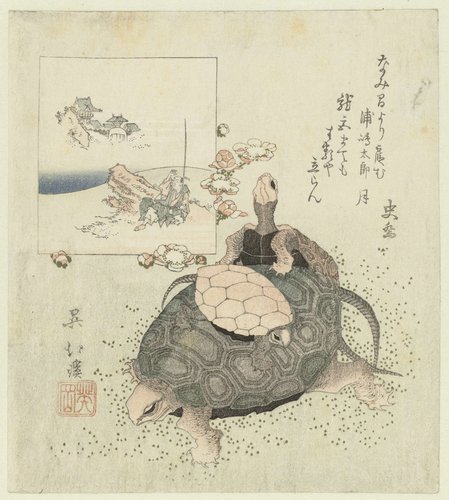
**Schildpadden (Turtles)** *Totoya Hokkei, c. 1825–1830* Totoya Hokkei, a Japanese ukiyo-e artist and pupil of the master Katsushika Hokusai, created this charming print during the late Edo period, time when woodblock printing flourished in Japan. Titled *Schildpadden*—Dutch for "Turtles"—the work likely captures these long-lived creatures as symbols of endurance and good fortune in Japanese culture, rendered with Hokkei's signature delicate touch and attention to natural forms. Measuring a modest 206 × 184 mm, it exemplifies the intimate scale of surimono (luxury prints often made for special occasions). Printed in the vibrant nishikie technique—"brocade pictures" prized for their rich, multi-layered colors achieved through intricate woodblock carving—Hokkei elevated the design with metallic pigments for shimmering effects and blindprinting (gauffrage), which adds subtle embossed textures without ink. These innovations highlight the technical virtuosity of ukiyo-e, transforming paper into a tactile, jewel-like object that delighted collectors. Part of the esteemed J.A. Bierens de Haan Bequest in Amsterdam, this piece bridges Japanese artistry with European appreciation, reflecting early 19th-century global exchanges in print culture. Visitors will appreciate its serene beauty and the masterful blend of artistry and craftsmanship.
About the Artist
Totoya Hokkei · 1780–1850
Totoya Hokkei (魚屋 北渓, 1780–1850), born Iwakubo Tatsuyuki in Edo (modern Tokyo), began his life as a humble fishmonger in the Yotsuya Samegahashi district, a trade reflected in his art name "Totoya," meaning fish shop. He transitioned to art through rigorous training, first studying under Kanō Yōsen'in Korenobu, head of the Kobikichō branch of the prestigious Kanō school, where he honed landscape p...