
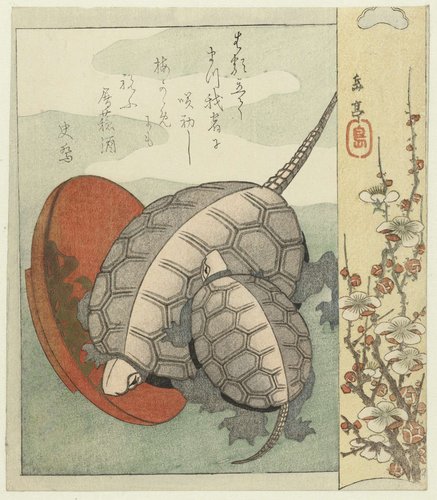
Schildpadden met sake schaaltje
c. 1826
Medium
nishikie, with metallic pigments
Dimensions
201; 172
Rights
Public Domain
About this artwork
Twee schildpadden met een gelakt rijstwijn (sake) schaaltje. Rechts pruimenbloesem. Met één gedicht.
Art Historical Context
**Schildpadden met sake schaalt (Turtles with Sake)** *Yashima Gakutei, c. 1826* *Nishikie woodblock with metallic pigments, 201 × 172 mm* This delicate nishikie print, or "brocade picture," by Yashima Gakutei captures a serene moment in late Edo-period Japan (1603–1868). Gakutei, a master of the ukiyo-e tradition, in intimate surimono—privately commissioned prints often exchanged as New Year's greetings among poets and elites. The small format and lavish metallic pigments evoke luxury, with gold or silver accents shimmering like dew on the turtles' shells and the glossy lacquered sake cup, a nod to refined everyday pleasures. At center, two turtles—symbols of longevity and good fortune in Japanese culture—nuzzle a sake cup, while plum blossoms bloom gracefully to the right, heralding early spring and resilience. A single poem adorns the composition, blending visual poetry with haiku-like verse, a hallmark of surimono that invited contemplation. Gakutei's precise lines and vibrant colors highlight his skill in capturing nature's quiet harmony, offering viewers a glimpse into the witty, auspicious artistry of 19th-century Japan. A charming reminder of fleeting beauty amid enduring life.
About the Artist
Yashima Gakutei · 1786–1868
Yashima Gakutei (c. 1786–1868), born in Osaka as the illegitimate son of a Tokugawa shogunate samurai named Hirata, adopted the name from his mother's subsequent marriage into the Yashima clan. Little is documented about his early years beyond these familial ties, but he pursued artistic training under the esteemed ukiyo-e masters Totoya Hokkei and Katsushika Hokusai, absorbing their precision in ...