
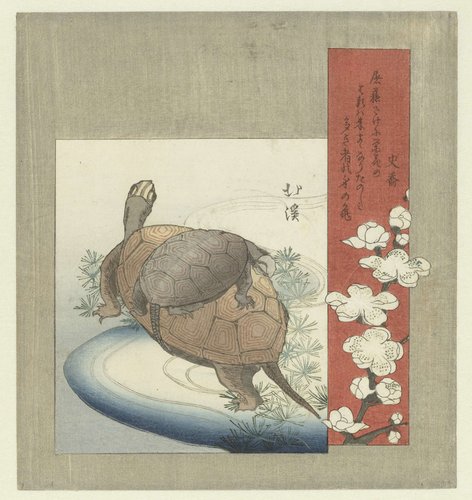
Schildpadden
ca. 1826
Medium
nishikie, with metallic pigments and blindprinting
Dimensions
199; 184
Rights
Public Domain
About this artwork
kleurenhoutsnede; blinddruk; lijnblok in zwart met kleurblokken; metaalpigmenten
Art Historical Context
**Schildpadden (Turtles)** by Totoya Hokkei,. 1826, invites visitors into the vibrant world of Edo-period Japan through this exquisite *nishikie*—a "brocade picture" woodblock print renowned for its lavish colors and textures. Hokkei, a ukiyo-e artist pupil of the master Katsushika Hokusai, crafted this intimate scene (199 × 184 mm) during a golden age of Japanese printmaking, when such works captured everyday beauty and nature's wonders for a broad audience, from merchants to samurai. The print's technical brilliance shines in its *kleurenhoutsnede* (color woodcut) process: a black line block paired with multiple color blocks, enhanced by shimmering metallic pigments and *blinddruk* (blind printing or embossing). These innovations created a tactile, jewel-like surface without additional ink, mimicking luxurious textiles and elevating humble paper into art. Such *nishikie* marked a peak in ukiyo-e refinement around the 1820s, blending precision craftsmanship with poetic observation. Turtles, or *schildpadden*, hold deep cultural resonance in Japan as symbols of longevity and good fortune, often depicted in folklore gliding through serene waters. Hokkei's delicate portrayal celebrates this auspicious motif, offering a timeless meditation on endurance and grace amid the fleeting "floating world" of ukiyo-e. A perfect gem for contemplating nature's quiet wisdom!
About the Artist
Totoya Hokkei · 1780–1850
Totoya Hokkei (魚屋 北渓, 1780–1850), born Iwakubo Tatsuyuki in Edo (modern Tokyo), began his life as a humble fishmonger in the Yotsuya Samegahashi district, a trade reflected in his art name "Totoya," meaning fish shop. He transitioned to art through rigorous training, first studying under Kanō Yōsen'in Korenobu, head of the Kobikichō branch of the prestigious Kanō school, where he honed landscape p...