
Seal
Unknown Artist
Medium
Chalcedony
Dimensions
Other: 9/16 x 1/4 in. (1.4 x 0.7 cm)
Classification
Gems
Culture
Minoan, Crete
Department
Greek and Roman Art
Museum
Metropolitan Museum of Art, New York, NY
Credit
Bequest of Richard B. Seager, 1926
Accession Number
26.31.257
Rights
Public Domain
Tags
Art Historical Context
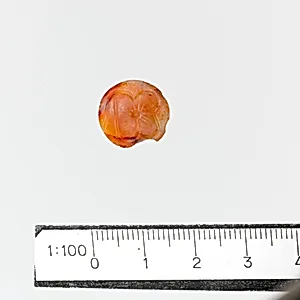
This exquisite Minoan seal, carved from chalcedony—a durable, semi-precious quartz prized for its fine grain and ability to hold intricate engravings—offers a glimpse into the sophisticated world of Bronze Age Crete. Measuring just 9/16 x 1/4 inches (1.4 x 0.7 cm), this tiny gem from the Metropolitan Museum of Art's Greek and Roman Art Department exemplifies the precision of Minoan gem-cutting techniques. Likely an intaglio seal used to impress designs into soft clay for administrative or ritual purposes, its floral motif reflects the Minoans' love for nature-inspired artistry. Minoan culture, flourishing on Crete around 3000–1100 BCE, produced some of the earliest advanced seals in the Aegean, blending functionality with aesthetic beauty. Flowers, a recurring theme in their art, symbolize fertility, growth, and the island's lush environment, evoking the vibrant frescoes of palaces like Knossos. These seals were status symbols, worn as jewelry or employed in trade and bureaucracy, highlighting Crete's role as a maritime powerhouse. Bequeathed to the Met in 1926 by archaeologist Richard B. Seager, who excavated key Minoan sites, this seal connects us to a lost civilization's ingenuity. A testament to ancient craftsmanship, it invites wonder at how such delicate beauty endured millennia.