
Seasons and Elements (Summer) (set of four)
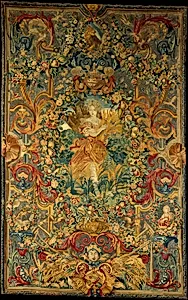
Medium
Canvas; silk, wool, and metal-thread embroidery in tent stitch (316 stitches per sq. inch, 49 per sq. cm.)
Dimensions
L. 174 x W. 110 inches (442 x 279.4 cm)
Classification
Textiles-Embroidered
Culture
French, Paris
Department
European Sculpture and Decorative Arts
Museum
Metropolitan Museum of Art, New York, NY
Credit
Rogers Fund, 1946
Accession Number
46.43.2
Rights
Public Domain
Tags
Art Historical Context
**Seasons and Elements (Summer, ca. 1683, stands as a magnificent panel from a set of four embroidered textiles celebrating the seasons and classical elements. Attributed to the renowned French court painter Charles Le Brun, designer Jean Lemoyen le Lain and the influential Marquise de Montespan—ress of Louis XIV—this work hails from the opulent world of Versailles. Crafted in Paris during the height of the Baroque era, it reflects the Sun King's passion for grandeur and allegory, where art glorified nature and monarchy alike. Executed on canvas with silk, wool, and shimmering metal threads in an exquisite tent stitch—boasting an astonishing 316 stitches per square inch—this monumental piece (174 x 110 inches) showcases extraordinary technical mastery. Vivid motifs of lions, crabs, birds, garlands, women, and blooming flowers evoke the warmth and abundance of summer, blending natural symbolism with courtly elegance. Such fine embroidery, rivaling painting in detail, was a luxury craft reserved for royal interiors. Now in the Metropolitan Museum of Art's European Sculpture and Decorative Arts collection (Rogers Fund, 1946), this textile embodies 17th-century French cultural prestige, bridging fine art and decorative splendor. Visitors will marvel at its preserved vibrancy, a testament to the era's innovative fusion of design and craftsmanship.
About the Artist
Charles Le Brun|Jean Lemoyen le Lorrain|Marquise de Montespan · 1619–1690
Charles Le Brun (1619–1690) was the most powerful artistic figure in seventeenth-century France, serving as the virtual dictator of official taste during the reign of Louis XIV and shaping the visual identity of the French Baroque in ways that resonated for generations. Born in Paris, he trained under the painter Simon Vouet before traveling to Rome in 1642, where he studied the works of Nicolas P...