
Seneca
1551 to 1600
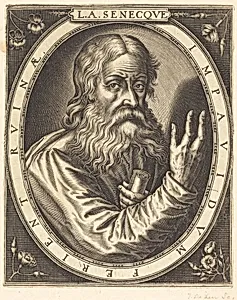
Medium
engraving on laid paper
Dimensions
plate: 13.7 x 11 cm (5 3/8 x 4 5/16 in.) sheet: 28.1 x 21 cm (11 1/16 x 8 1/4 in.)
Classification
Department
CG-E
Museum
National Gallery of Art, Washington, D.C.
Credit
Gift of John O'Brien
Accession Number
1991.208.8
Rights
Public Domain
Art Historical Context
In the late 16th century, engraver Thomas de Leu this striking portrait of *Seneca*, the renowned Stoic philosopher (c. 4 BCE–65 CE), capturing the humanist fascination with classical antiquity during the Renaissance Active between 1551 and 1600 in Paris, de Leu was part of a vibrant tradition of printmakers who elevated engraving as a medium for disseminating knowledge and prestige. His work reflects Mannerist elegance, with fine lines and intricate details that evoke Seneca's contemplative wisdom, making classical figures accessible to scholars and collectors across Europe. This engraving on laid paper measures a modest plate size of 13.7 x 11 cm, yet its technical precision—achieved through de Leu's skilled burin work—demonstrates the era's mastery of intaglio printing. Laid paper, with its visible chain lines, was a hallmark of high-quality Renaissance prints, prized for durability and clarity. Such engravings were revolutionary, allowing affordable reproduction of portraits that adorned cabinets of curiosities and fueled intellectual discourse. Today, housed in the National Gallery of Art's print collection (gift of John O'Brien, Department CG-E), *Seneca* exemplifies how prints bridged art and philosophy, inviting visitors to ponder timeless virtues amid the opulence of Fontainebleau-inspired Mannerism. A gem for those exploring the interplay of image and idea!
About the Artist
Thomas de Leu · 1560–1620
Thomas de Leu (c. 1560–c. 1612) was a Flemish-born engraver and print publisher who became one of the most prolific and celebrated portrait engravers working in France during the late sixteenth and early seventeenth centuries. Born in Oudenaarde in the Low Countries, the son of a print dealer, he began his professional life in Antwerp before making his way to Paris, where he worked in the workshop...