
Spoon
1600–1650
Medium
cutlery
Classification
cutlery
Department
Smithsonian Collection
Museum
Smithsonian American Art Museum
Credit
Gift of Paul Walter
Accession Number
2007-14-2
Rights
Public Domain
About this artwork
Research in Progress
Art Historical Context
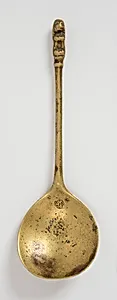
This modest yet evocative *Spoon*, dating from 1600–1650, offers a glimpse into the everyday craftsmanship of the early colonial era. Housed in the Smithsonian American Art Museum's Smithsonian Collection and generously gifted by Paul Walter, this piece of cutlery exemplifies the utilitarian objects that sustained colonial households during a time of settlement and survival. With its artist unknown and research still in progress, it invites us to ponder the anonymous hands that shaped such tools amid the challenges of the New World. As a classified example of cutlery, the spoon highlights the intersection of function and artistry in 17th-century America. Simple eating implements like this were often hand-forged from metal or carved from wood, reflecting the resourcefulness of early artisans. Its presence in an art museum underscores how ordinary items carry historical weight, preserving traces of domestic life, trade, and cultural exchange between Europe and the Americas. Though details remain under study, this spoon connects us to the uncelebrated makers of early America, reminding visitors that beauty and significance often hide in the tools of daily existence. A quiet testament to resilience and skill.
About the Artist
Unknown
The artist designated as "Unknown" in our virtual museum's collection exemplifies a poignant chapter in art history: creators whose identities have faded into obscurity despite the enduring power of their work. With only one known artwork attributed to them in our holdings, this figure represents countless anonymous hands that shaped visual culture across centuries. Museums worldwide, including th...