
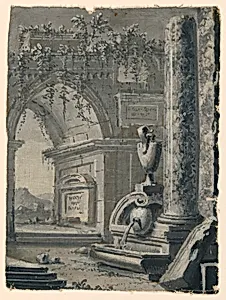
Stage Design, Antique Views in Garden
18th century
Medium
theater
Classification
theater
Department
Smithsonian Collection
Museum
Smithsonian American Art Museum
Credit
Museum purchase through gift of various donors and from Eleanor G. Hewitt Fund
Accession Number
1938-88-198
Rights
Public Domain
About this artwork
Research in Progress
Art Historical Context
Step into the enchanting world of 18th theater with *Stage Design, Antique Views Garden*, a captivating rendering now housed in the Smithsonian American Art Museum's Smithsonian. Created by an unknown artist, work exemplifies the elaborate stage backdrops that transformed playhouses into immersive dreamscapes. Depicting classical "antique" vistas—likely inspired by ancient Roman or Greek gardens with ruins, fountains, and lush foliage—it would have set the scene for operas, ballets, or dramas, drawing audiences into a romanticized past. In the 18th century, theater design flourished amid the Baroque and Rococo movements, where artists mastered linear perspective, atmospheric lighting, and trompe-l'œil effects to create depth on flat canvases. These designs, often painted on canvas or wood and manipulated with pulleys for scene changes, were engineering marvels of their time, blending architecture, painting, and performance. This piece reflects the era's fascination with antiquity, fueled by archaeological discoveries and neoclassical tastes, evoking idyllic retreats amid Europe's cultural renaissance. Acquired through museum purchase with gifts from various donors and the Eleanor G. Hewitt Fund, its classification as theater art highlights the Smithsonian's commitment to performative heritage. With research ongoing, it invites us to ponder the anonymous genius behind these forgotten spectacles—reminders of how stagecraft once blurred the line between reality and fantasy.
About the Artist
Unknown
The artist designated as "Unknown" in our virtual museum's collection exemplifies a poignant chapter in art history: creators whose identities have faded into obscurity despite the enduring power of their work. With only one known artwork attributed to them in our holdings, this figure represents countless anonymous hands that shaped visual culture across centuries. Museums worldwide, including th...