
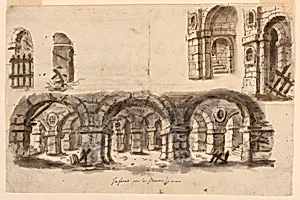
Stage Design, Prison Cellar
18th century
Classification
theater
Department
Smithsonian Collection
Museum
Smithsonian American Art Museum
Credit
Museum purchase through gift of various donors and from Eleanor G. Hewitt Fund
Accession Number
1938-88-215
Rights
Public Domain
About this artwork
Research in Progress
Art Historical Context
Step into the shadowy world of 18-century theater with *Stage Design, Prison Cellar*, a captivating artifact from the Smithsonian American Art's collection. This enigmatic drawing or print depicts a grim underground prison setting, complete with stone walls, iron bars, and flickering torchlight—elements designed to immerse audiences in tales of captivity and drama. Acquired through museum purchase with gifts from various donors and the Eleanor G. Hewitt, it belongs to the theater classification, highlighting the artistry behind the scenes of live performances. In the 1700s, stage designers played a crucial role in transforming wooden proscenium stages into vivid illusions, often using perspective tricks and atmospheric details to heighten emotional impact. Prison cellars were popular motifs in operas, tragedies, and spectacles, evoking the era's fascination with Gothic intrigue, moral dilemmas, and heroic escapes—think productions inspired by works like those of Shakespeare or emerging sentimental dramas. Though the artist remains unknown and research is ongoing, this piece offers a rare glimpse into the technical ingenuity of Baroque-to-Rococo theater, where light and shadow manipulated audience perception. Today, it invites us to ponder the unsung creators who built worlds of make-believe, bridging art and performance in American collections. A testament to theater's enduring power, it reminds us how simple designs could stir profound suspense.
About the Artist
Unknown
The artist designated as "Unknown" in our virtual museum's collection exemplifies a poignant chapter in art history: creators whose identities have faded into obscurity despite the enduring power of their work. With only one known artwork attributed to them in our holdings, this figure represents countless anonymous hands that shaped visual culture across centuries. Museums worldwide, including th...