
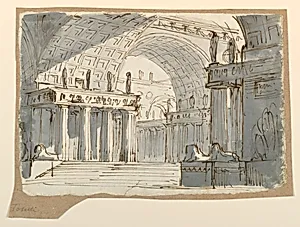
Stage Design, Vaulted Classical Building
ca. 1800
Classification
theater
Department
Smithsonian Collection
Museum
Smithsonian American Art Museum
Credit
Museum purchase through gift of various donors and from Eleanor G. Hewitt Fund
Accession Number
1938-88-398
Rights
Public Domain
About this artwork
Research in Progress
Art Historical Context
Step into the grand illusion of 19th-century theater with *Stage Design, Vaulted Building* by Angelo Toselli (ca. 1765?–1820). Created around 1800, this evocative rendering captures a majestic vaulted interior inspired by ancient Roman architecture, evoking the timeless grandeur of classical antiquity. Toselli, an artist active during the Napoleonic era, specialized in scenic designs that brought dramatic worlds to life on stage, transforming wooden prosceniums into immersive spectacles for audiences in Europe's burgeoning opera houses and playhouses. The neoclassical motifs—sweeping vaults, symmetrical forms, and architectural precision—reflect the era's fascination with antiquity, revived through Enlightenment ideals and revolutionary fervor. Such designs were essential to theater production, guiding painters and machinists to create perspective illusions with painted backdrops, wings, and borders. Though the medium remains unidentified amid ongoing research, this work highlights the artistry behind the curtain, blending architecture and fantasy. Acquired by the Smithsonian American Art Museum through generous donors and the Eleanor G. Hewitt Fund, it invites us to ponder how stagecraft shaped cultural narratives. A window into Toselli's craft, it reminds visitors of theater's power to transport us through space and time.