
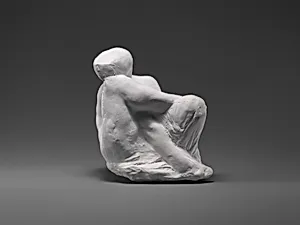
Study for Obsession
modeled ca. 1896, cast before 1912
Medium
Cast plaster
Dimensions
Height: 5 1/2 in. (14 cm)
Classification
Sculpture
Culture
French
Department
European Sculpture and Decorative Arts
Museum
Metropolitan Museum of Art, New York, NY
Credit
Gift of Auguste Rodin, 1912
Accession Number
12.12.4
Rights
Public Domain
Tags
Art Historical Context
Welcome to the Metropolitan Museum of Art's Sculpture and Decorative Arts collection, where Auguste Rodin's *Study for Obsession*modeled ca. 1896, cast before 191) invites intimate contemplation. This petite cast plaster sculpture, standing just 5½ inches (14 cm) tall, a female nude in a dynamic, twisting pose that embodies Rodin's mastery of the human form. Gifted directly by the artist in 1912, it his generous legacy to American audiences. Rodin, a pioneering French sculptor often called the father of modern sculpture, revolutionized the medium in the late 19th century by breaking from classical ideals. His impressionistic style emphasized raw emotion, surface texture, and the illusion of movement—evident here in the fluid, obsessive contortions of the figure. As a preparatory "study," this work likely explored themes of passion and inner turmoil for a larger composition, showcasing Rodin's innovative use of plaster casts as versatile models before final bronze editions. This intimate piece highlights Rodin's fascination with the female nude, blending sensuality with psychological depth. Its modest scale makes it perfect for close study, revealing the sculptor's genius in translating fleeting gestures into enduring art. A true gem for lovers of sculpture!
About the Artist
Auguste Rodin · 1840–1917
François Auguste René Rodin (1840-1917) stands as the founder of modern sculpture, transforming the art form from academic tradition into expressive modernism. Born into a working-class Parisian family, Rodin faced early rejection, failing three times to gain admission to the prestigious École des Beaux-Arts. This setback forced him to work as a craftsman for nearly two decades, though his 1875 tr...