
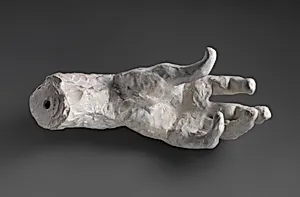
Study of a Hand
modeled ca. 1885, cast before 1912
Medium
Cast plaster
Dimensions
Length: 13 1/2 in. (34.3 cm)
Classification
Sculpture
Culture
French
Department
European Sculpture and Decorative Arts
Museum
Metropolitan Museum of Art, New York, NY
Credit
Gift of Auguste Rodin, 1912
Accession Number
12.12.8
Rights
Public Domain
Tags
Art Historical Context
Auguste Rodin's *Study of a Hand*, around 1885 and in plaster before 1912, the French sculptor's revolutionary approach to capturing the human form. At just 13½ inches long, this intimate study isolates a single hand in a dynamic, twisting pose, showcasing Rodin's mastery of anatomy and emotion. Gifted directly by the artist to the Metropolitan Museum of Art 1912, it the museum's European Sculpture and Decorative Arts collection as testament to his generosity and legacy. Rodin, a pioneer of modern sculpture, broke from classical ideals by emphasizing rough, textured surfaces that mimic the play of light on skin and muscle—evident in this plaster cast's tactile quality. During the 1880s, he was immersed in ambitious projects like *The Gates of Hell*, producing countless partial studies like this to explore gesture and vitality. Hands held special significance for Rodin, often symbolizing inner turmoil or strength in his works. This piece invites visitors to appreciate the preparatory intimacy behind Rodin's monumental bronzes, revealing how everyday fragments could convey profound humanity. A true gem for hand enthusiasts, it highlights the enduring power of focused observation in art.
About the Artist
Auguste Rodin · 1840–1917
François Auguste René Rodin (1840-1917) stands as the founder of modern sculpture, transforming the art form from academic tradition into expressive modernism. Born into a working-class Parisian family, Rodin faced early rejection, failing three times to gain admission to the prestigious École des Beaux-Arts. This setback forced him to work as a craftsman for nearly two decades, though his 1875 tr...