
Study of a hand
original model late 19th—early 20th century
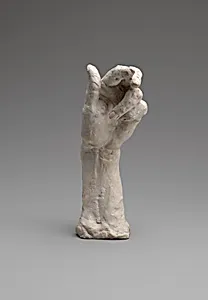
Medium
Cast plaster
Dimensions
6 3/8 × 2 1/2 × 3 3/4 in. (16.2 × 6.4 × 9.5 cm)
Classification
Sculpture
Culture
French
Department
European Sculpture and Decorative Arts
Museum
Metropolitan Museum of Art, New York, NY
Credit
Gift of Auguste Rodin, 1912
Accession Number
12.12.10
Rights
Public Domain
Tags
Art Historical Context
Auguste Rodin's *Study of a Hand* (original model late 19thearly 20th century captures the masterful realism that defined the French sculptor's revolutionary approach to the human form. A pioneer of modern sculpture, Rodin drew from Impressionist influences, emphasizing texture, light, and movement over classical idealism. This intimate cast plaster piece, measuring just 6 3/8 × 2 1/2 × 3 3/4 inches, exemplifies his practice of creating detailed studies of isolated body parts—especially hands—to explore anatomy, gesture, and emotion with unprecedented vitality. Rodin produced numerous such studies, often as preparatory elements for larger works like *The Gates of Hell* or *The Thinker*, where hands convey profound psychological depth. The cast plaster medium, lightweight and versatile, allowed for easy replication and refinement, bridging his studio experiments with finished bronzes. Gifted directly by Rodin to the Metropolitan Museum of Art in 1912, this work offers a rare glimpse into his process during his most innovative years. Today, in the Met's European Sculpture and Decorative Arts department, it reminds us how Rodin transformed the hand from mere appendage into a symbol of human expression, inviting viewers to ponder the subtle power in every gesture.
About the Artist
Auguste Rodin · 1840–1917
François Auguste René Rodin (1840-1917) stands as the founder of modern sculpture, transforming the art form from academic tradition into expressive modernism. Born into a working-class Parisian family, Rodin faced early rejection, failing three times to gain admission to the prestigious École des Beaux-Arts. This setback forced him to work as a craftsman for nearly two decades, though his 1875 tr...