
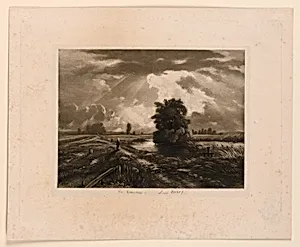
Sunshine After Rain
Classification
Department
Smithsonian Collection
Museum
Smithsonian American Art Museum
Credit
Bequest of George Campbell Cooper
Accession Number
1896-3-408
Rights
Public Domain
About this artwork
Research in Progress
Art Historical Context
**Sunshine After Rain** Théodore Rousseau captures the serene beauty of nature in the mid-19th century, a hallmark of the French artist's dedication to realistic landscapes. Born in 1812, Rousseau a leading figure in the Barbizon School, a group of painters rejected the polished idealism of Romanticism in favor of direct observation of the outdoors. Working around 1845 in the Forest of Fontainebleau, often depicted dramatic shifts in weather and light, evoking the restorative power of a sunlit scene emerging after rain—perfectly suited to this evocative title. As a print from the Smithsonian American Art Museum's collection, bequeathed by George Campbell Cooper, the work reflects the era's growing interest in reproductive prints, which made fine art accessible beyond original paintings. Rousseau's meticulous technique emphasized texture and atmosphere, influencing later Impressionists like Monet. Despite facing rejection from the Paris Salon, his commitment to truth in nature earned him posthumous acclaim as a pioneer of plein-air painting. This piece invites visitors to ponder renewal and the sublime in everyday landscapes, a timeless theme in Rousseau's oeuvre. (178 words)