
Surimono
ca. 1860
Medium
Woodblock print; ink and color on paper
Dimensions
Image: 7 3/4 × 10 7/8 in. (19.7 × 27.6 cm) Mat: 15 1/4 × 22 3/4 in. (38.7 × 57.8 cm)
Classification
Prints
Culture & Period
Japan · Edo period (1615–1868)
Department
Asian Art
Museum
Metropolitan Museum of Art, New York, NY
Credit
Purchase, Gifts, Bequests, and Funds from various donors, by exchange, 1955
Accession Number
JP3172
Rights
Public Domain
Tags
Art Historical Context
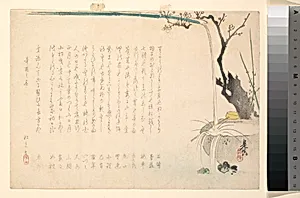
Shibata Zeshin's *Surimono* (ca. 1860) is a exquisite woodblock print Japan's Edo period (1615–1868), showcasing the artist's mastery in capturing nature's delicate beauty. Rendered in ink and color on paper, this intimate work measures about 7¾ × 10⅞ inches and depicts blooming flowers and trees, ev the transient splendor of the seasons—a core theme in Japanese art. Zeshin, renowned for his innovative lacquerware that mimicked painting, brought those refined techniques to printmaking, creating shimmering effects through subtle color layering and precise carving. Surimono, meaning "printed things," were luxurious, privately commissioned prints often exchanged as New Year's greetings or poetic tokens among literati. Unlike mass-produced ukiyo-e, they emphasized elegance and exclusivity, blending visual artistry with calligraphy. Zeshin's piece exemplifies this tradition at its twilight, just before the Meiji Restoration upended Edo culture. Housed in the Metropolitan Museum of Art's Asian Art department, this print highlights woodblock printing's pinnacle: carvers, printers, and artists collaborating for vivid, durable impressions. Visitors will appreciate its serene harmony, inviting reflection on nature's ephemerality in a rapidly modernizing Japan.
About the Artist
Shibata Zeshin · 1807–1891
Japanese, 1807–1891