
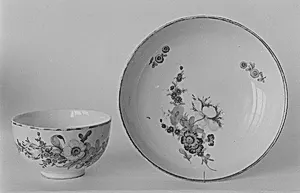
Teabowl and saucer
Medium
Hard-paste porcelain
Dimensions
Height (Teabowl): 1 7/8 in. (4.8 cm); Diameter (Saucer): 5 1/8 in. (13 cm)
Classification
Ceramics-Porcelain
Culture
Swiss, Zurich
Department
European Sculpture and Decorative Arts
Museum
Metropolitan Museum of Art, New York, NY
Credit
Gift of Henry G. Marquand, 1894
Accession Number
94.4.164, .165
Rights
Public Domain
Tags
Art Historical Context
This delicate teabowl and sa, crafted by the Zurich Pottery and Porcelain Factory around 1775, exemplifies the of Swiss porcelain production in the late 18th century. from hard-paste porcelain technically advanced material fired at high temperatures to achieve the translucent strength and pure white body rivaling prized Chinese imports—these pieces were part of Europe's booming luxury ceramics industry. Zurich's factory, active from 1763 to 1783, was a key player in this movement, blending local innovation with international tastes during the Enlightenment era when tea drinking became a fashionable social ritual among Europe's elite. Adorned with floral motifs, as suggested by its decorative tags, the set features a teabowl just under 2 inches tall and a saucer spanning over 5 inches, perfect for intimate afternoon teas. The factory's artists often employed overglaze enameling techniques to paint vibrant flowers, capturing nature's elegance in miniature. These wares not only served daily pleasure but symbolized refined connoisseurship, reflecting Zurich's ambition to compete with Meissen and Sèvres. Today, this gift to the Metropolitan Museum of Art from Henry G. Marquand in 1894 invites us to appreciate how everyday objects embodied cultural aspirations, bridging Swiss craftsmanship with global porcelain traditions.