
Terracotta kylix (drinking cup)
ca. 480–470 BCE
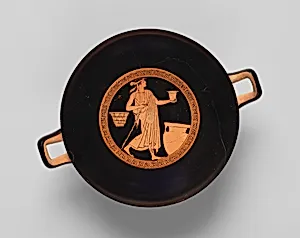
Medium
Terracotta
Dimensions
H. 3 1/4 in. (8.2 cm) diameter 8 7/16 in. (21.4 cm)
Classification
Vases
Culture & Period
Greek, Attic · Classical
Department
Greek and Roman Art
Museum
Metropolitan Museum of Art, New York, NY
Credit
Rogers Fund, 1921
Accession Number
21.88.150
Rights
Public Domain
Art Historical Context
This elegant terracotta kylix, crafted in Athens around 480–470 BCE, exemplifies the refined artistry of the early Classical period in ancient Greece. Created by the Brygos Painter, one of the most celebrated vase painters of his time, the cup served as a drinking vessel during symposia—lively social gatherings where Athenian men discussed philosophy, politics, and poetry. Its modest dimensions, just over eight inches across, made it ideal for intimate use at the table, while its graceful form highlights the technical mastery of Attic pottery workshops. The Brygos Painter worked in the red-figure technique, which allowed for greater naturalism and expressive detail compared to earlier black-figure styles. His works often feature lively scenes from mythology and daily life, rendered with fluid lines and careful attention to drapery and gesture. As a product of Athens following the Persian Wars, this kylix reflects a moment of cultural confidence and artistic innovation, when Greek potters elevated functional objects into sophisticated works of art. Today housed in the Metropolitan Museum of Art, this vessel offers visitors a tangible connection to the rituals and aesthetics of ancient Greek society. Its survival underscores the enduring appeal of Classical design and the central role of painted pottery in preserving stories from the ancient world.
About the Artist
Brygos Painter
The Brygos Painter is one of the most gifted and prolific red-figure vase painters of ancient Athens, active in the early fifth century BCE during one of the most dynamic periods of Greek artistic development. Like most ancient Greek vase painters, he is known to us not by his personal name but by a conventional scholarly designation — in this case derived from the potter Brygos, whose name appear...