
Textile
Unknown Artist
16th century
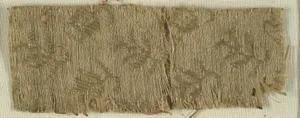
Medium
Linen
Dimensions
Overall: 1 3/8 × 3 in. (3.5 × 7.6 cm) Storage (Mat): 5 1/2 × 8 1/4 in. (14 × 21 cm)
Classification
Textiles-Woven
Culture
German
Department
Medieval Art
Museum
Metropolitan Museum of Art, New York, NY
Credit
Rogers Fund, 1909
Accession Number
09.50.1267
Rights
Public Domain
Art Historical Context
This delicate 16th-century German textile, a woven fragment measuring just 1⅜ × 3 inches, offers a glimpse into the refined craftsmanship of late medieval Europe. Acquired through the Rogers Fund in 1909 and in the Metropolitan Museum of's Medieval Art department, exemplifies the everyday artistry of anonymous makers who wove fine linens for clothing, household linens, or ecclesiastical uses. Linen, prized for its durability, breathability, and ability to take dyes, was a staple in German households and workshops during this era of transition from the Middle Ages to the Renaissance. Woven textiles like this one highlight the technical mastery of looms and patterning techniques prevalent in 16th-century Germany, where regions like Saxony and Nuremberg were textile hubs. Though small—likely a surviving piece from a larger garment or furnishing—its preservation speaks to the cultural value placed on such items, which often featured geometric motifs or borders reflecting local traditions. These fragments are invaluable for understanding social history, revealing how ordinary people adorned their lives amid the Protestant Reformation's upheavals. Today, this modest artwork invites visitors to appreciate the unsung labor behind medieval splendor, reminding us that beauty thrived in the intimate scale of daily fabrics.