
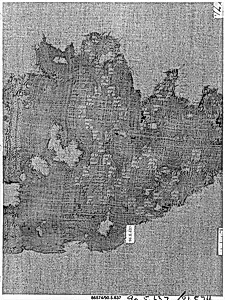
Textile Fragment
Unknown Artist
4th–5th century
Medium
Wool (?), linen; plain weave
Dimensions
Max. H. 10 7/16 in. (26.5 cm) Max. W. 8 11/16 in. (22 cm)
Classification
Textiles
Department
Islamic Art
Museum
Metropolitan Museum of Art, New York, NY
Credit
Gift of George F. Baker, 1890
Accession Number
90.5.637
Rights
Public Domain
Art Historical Context
This delicate textile fragment, dating to the 4th–5th century, offers a glimpse into the everyday artistry of Late Antique weaving traditions in the Near East or Egypt. Crafted from wool (possibly) and linen in a weave—a fundamental technique where warp and weft threads interlace in a simple over-under pattern—it measures just 10⅞ × 8¾ inches (26.5 × 22 cm). Such fragments, preserved through the arid climates of the region, were likely parts of garments, furnishings, or ceremonial cloths, highlighting textiles' role as essential cultural artifacts. Classified within the Metropolitan Museum of Art's Islamic Art department, this piece bridges pre-Islamic Late Antiquity and the emerging Islamic world, reflecting enduring technical skills passed down through generations. Plain weave was prized for its strength and versatility, allowing for efficient production in workshops that supplied bustling trade routes. Donated in 1890 by philanthropist George F. Baker, it exemplifies how 19th-century collectors preserved these humble yet profound survivors of time. Though worn by centuries, the fragment whispers of ancient hands at work, connecting us to lives woven into fabric long ago. A testament to craftsmanship's quiet endurance.