
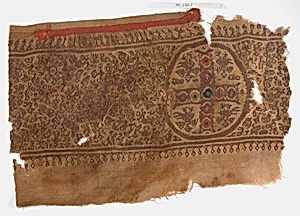
Textile Fragment
Unknown Artist
9th century
Medium
Linen and wool
Dimensions
H. 7 1/4 in. (18.4 cm) W. 11 1 /8 in. (28.3 cm)
Classification
Textiles-Woven
Department
Islamic Art
Museum
Metropolitan Museum of Art, New York, NY
Credit
Rogers Fund, 1966
Accession Number
66.132.1
Rights
Public Domain
Art Historical Context
This exquisite *Textile Fragment*, dating to the 9th century, offers a glimpse into the sophisticated world of early Islamic weaving. Crafted from linen and—a practical combination valued for its durability and comfort—this small piece (7¼ × 11⅛ inches) survives as a testament to the artistry of an unknown maker. Housed in the Metropolitan Museum of Art's Islamic Department, it entered the collection through the Rogers Fund in 1966. In the Abbasid era, textiles were a cornerstone of Islamic culture, produced in bustling centers like Baghdad, Fustat (old Cairo), and Syria. Woven techniques, such as tapestry or compound weaves, allowed artisans to create intricate patterns that adorned garments, prayer rugs, and furnishings. Linen provided a fine ground, while wool added rich color and texture, reflecting the era's mastery of natural dyes and looms. These fabrics were prized trade goods, symbolizing wealth and piety. Though fragmented, this artifact highlights the enduring legacy of Islamic textile innovation, where geometry and abstraction conveyed spiritual depth without figurative imagery. Visitors will appreciate its tactile beauty, evoking the vibrant markets and skilled hands of a golden age.