
Textile Fragment
Unknown Artist
14th–15th century
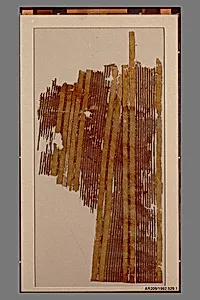
Medium
Silk and cotton
Dimensions
H. 18 1/2 in. (47 cm) W. 23 3/4 (60.3 cm)
Classification
Textiles-Woven
Department
Islamic Art
Museum
Metropolitan Museum of Art, New York, NY
Credit
Gift of Dr. Lilly Engler, 1983
Accession Number
1983.529.1
Rights
Public Domain
Art Historical Context
This exquisite *Textile Fragment* from 14th–15th offers a glimpse into the masterful world of Islamic textile production. Housed in the Metropolitan Museum of Art's Department Islamic Art, this woven silk and cotton piece (18 1/2 × 23 3/4 inches) likely originated from a thriving center like Mamluk Egypt or Persia, where artisans crafted luxurious fabrics for garments, furnishings, and ceremonial use. During this era, Islamic weavers were renowned for their technical prowess, blending silk's luster with cotton's durability to create sumptuous, long-lasting textiles that symbolized wealth and refinement. The fragment's woven structure highlights sophisticated techniques such as lampas or brocading, where metallic threads or colorful silks were interlaced to form intricate patterns—often geometric motifs, floral arabesques, or calligraphy evoking spiritual and natural themes central to Islamic design. These patterns not only served aesthetic purposes but also adhered to aniconic traditions, emphasizing abstraction and repetition as pathways to the divine. As a gift from Dr. Lilly Engler in 1983, this survivor of centuries transports us to a time when textiles were high art, traded along the Silk Road and adorning courts from Cairo to Samarkand. Though fragmented, it whispers of the anonymous genius behind Islamic weaving, inviting us to appreciate the enduring beauty of this cultural heritage.