
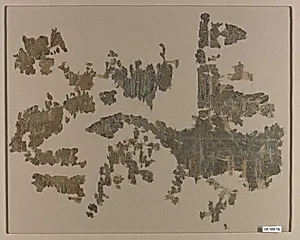
Textile Fragment with Addorsed Parrots and Griffins
Unknown Artist
early 13th century
Medium
Silk; lampas
Dimensions
Textile: H. 11 3/4 in. (29.8 cm) W. 14 3/4 in. (37.5 cm) Mount: H. 15 3/4 in. (40 cm) W. 19 in. (48.3 cm) D. 1 1/2 in. (3.8 cm)
Classification
Textiles-Woven
Department
Islamic Art
Museum
Metropolitan Museum of Art, New York, NY
Credit
Rogers Fund, 1908
Accession Number
08.109.1b
Rights
Public Domain
Tags
Art Historical Context
This exquisite textile fragment, dating to the early 13th century, showcases the masterful weaving traditions of the Islamic world. Titled *Textile Fragment with Added Parrots and Griff*, it features pairs of parrots and mythical griffins facing back-to (addorsed) amid intricate patterns. Crafted from luxurious silk using the lampas technique—a complex weave with a patterned satin ground and supplementary warps—this 11¾ × 14¾-inch piece (29.8 × 37.5 cm) was likely part of a larger garment, hanging, or furnishing, highlighting silk's status as a high-value trade good along medieval Silk Road routes. In the Islamic art tradition, such motifs carried rich symbolism: parrots evoked exotic paradises and royal courts, while griffins—fierce lion-eagle hybrids—represented power and protection, blending Persian, Central Asian, and Byzantine influences. Lampas weaves, prized for their durability and shimmering effects, were produced in urban workshops from Egypt to Iraq, serving elite patrons. Acquired through the Rogers Fund in 1908, this fragment now resides in The Metropolitan Museum of Art's Department of Islamic Art, offering a glimpse into the opulence of 13th-century textile artistry. Though the artist remains unknown, the fragment's vibrant birds and fantastical creatures invite visitors to imagine the splendor of medieval Islamic palaces, where such textiles draped thrones and adorned ceremonies.