
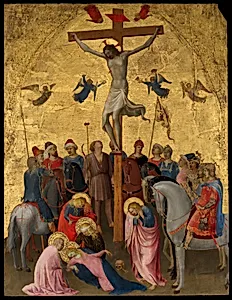
The Crucifixion
ca. 1420–23
Medium
Tempera on wood, gold ground
Dimensions
25 1/8 x 19 in. (63.8 x 48.3 cm)
Classification
Paintings
Department
European Paintings
Museum
Metropolitan Museum of Art, New York, NY
Credit
Maitland F. Griggs Collection, Bequest of Maitland F. Griggs, 1943
Accession Number
43.98.5
Rights
Public Domain
Tags
Art Historical Context
Fra Angelico, the Dominican friar and Early Renaissance master born Guido di Pietro, created *The Crucifixion* around 1420–23, a pivotal moment when Italian art bridged medieval traditions and emerging naturalism. This tempera on wood panel with gold ground, measuring 25 1/8 x 19 inches, exemplifies the devotional panels prized by private patrons in early 15th-century Florence. The luminous gold background, a hallmark of International Gothic influence, evokes heavenly radiance, drawing viewers into spiritual contemplation. At the center, Christ hangs on the cross amid a poignant assembly: the sorrowful Virgin Mary and Mary Magdalene below, flanked by angels collecting his blood, while soldiers on horseback witness the scene. A skull at the base symbolizes Golgotha, the "place of the skull," underscoring themes of sacrifice and redemption. Fra Angelico's delicate figures, with their graceful poses and tender expressions, blend Gothic elegance with Renaissance clarity, using tempera’s fine layering for jewel-like colors and subtle modeling. Housed in the Metropolitan Museum of Art's Maitland F. Griggs Collection, this intimate work invites quiet reflection on Christ's passion, reflecting Fra Angelico's vow to paint only for God's glory. Its enduring appeal lies in its emotional depth and technical purity, a window into faith-driven artistry.