
The Gods Representing the Planets
Classification
figures
Department
Smithsonian Collection
Museum
Smithsonian American Art Museum
Credit
Purchased for the Museum by the Advisory Council
Accession Number
1921-6-285-122
Rights
Public Domain
About this artwork
Research in Progress
Art Historical Context
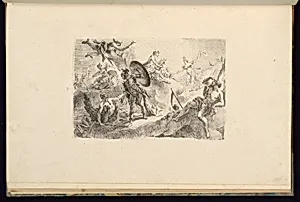
**The Gods Representing the Planets** (1770) by German artist Thomas Christian Winck1738–1797) captures the celestial allure of classical mythology through allegorical figures. Winck, a Bavarian and painter active in the late Rococo era, often drew on ancient gods to symbolize cosmic forces—here evoking planets like Jupiter, Venus, and Saturn as divine personifications. Created during a time when Enlightenment interest in astronomy blended with Baroque traditions, this work reflects Europe's fascination with the heavens, bridging art, science, and legend. Though the medium remains under study, its classification as "figures" suggests a dynamic sculptural or painted ensemble, typical of Winck's decorative style seen in lavish church frescoes and stucco decorations across southern Germany. Purchased for the Smithsonian American Art Museum by the Advisory Council, it highlights transatlantic exchanges of European art into American collections, enriching our understanding of 18th-century iconography. This piece invites visitors to ponder humanity's enduring quest to personify the stars, a motif echoing from antiquity to the Rococo salons. Ongoing research promises deeper revelations into Winck's techniques and influences.