
The Harugoma Dance
c. 1764
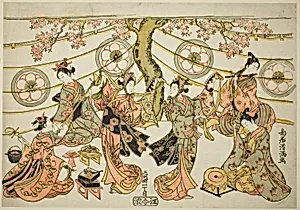
Medium
Color woodblock print; o-oban yoko-e, benizuri-e
Dimensions
30.2 × 43.1 cm (11 7/8 × 16 15/16 in.)
Classification
woodblock print
Department
Arts of Asia
Museum
Art Institute of Chicago
Accession Number
19913
Rights
Public Domain
Art Historical Context
Torii Kiyomitsu I's *The Harugoma* (c. 1764) is a vibrant color woodblock print from Japan's Edo period, exemplifying the ukiyo-e tradition of capturing fleeting moments of beauty and theater. As a leading figure in the Torii school—renowned for yakusha-e portraits of kabuki actors—Kiyomitsu masterfully depicted performers in dynamic motion, likely enacting the lively Harugoma dance, a celebratory folk performance blending music and acrobatics. Printed in the generous o-oban yoko-e format (30.2 × 43.1 cm), its horizontal composition immerses viewers in the energy of the stage. This benizuri-e, or "rose-print," technique marked an exciting evolution in woodblock printing, layering subtle blues and pinks for a two-color palette that preceded the full-spectrum nishiki-e "brocade prints." Kiyomitsu's precise lines and bold poses highlight the actors' expressive faces and flowing robes, evoking the thrill of 18th-century kabuki houses in Edo (modern Tokyo). Housed in the Art Institute of Chicago's Arts of Asia department, this print offers a window into Japan's thriving popular culture, where art democratized theater for everyday audiences. Its cultural significance lies in preserving the ephemeral joy of performance, reminding us how ukiyo-e bridged fine art and mass media long before the modern era.
About the Artist
Torii Kiyomitsu I · 1735–1785
Japanese, 1735–1785