
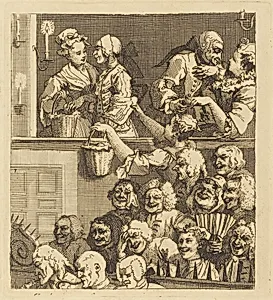
The Laughing Audience
1733
Medium
etching
Dimensions
sheet: 25.8 × 22 cm (10 3/16 × 8 11/16 in.)
Classification
Department
CG-E
Museum
National Gallery of Art, Washington, D.C.
Credit
Gift of Addie Burr Clark
Accession Number
1946.9.79
Rights
Public Domain
Art Historical Context
William Hogarth's *The Laughing Audience*1733) is a masterful etching that captures the artist's sharp wit and keen observation of 18th-century English society. Measuring just 25.8 × 22 cm, this intimate print exemplifies Hogarth's pioneering use of etching—a technique that allowed for intricate details and affordable reproduction, making his satirical works accessible to a wide public. As a foundational figure in British art, Hogarth blended Rococo exuberance with moralistic caricature, often critiquing the follies of his time through crowded, narrative scenes. Created amid London's vibrant theater scene, the print depicts a boisterous crowd convulsed in laughter, likely poking fun at the fickle tastes of playgoers and the herd mentality of fashionable audiences. Hogarth, a vocal critic of pretentious entertainments like Italian opera, used such works to champion native English drama and expose social absurdities. The dynamic composition, with exaggerated expressions and chaotic energy, draws viewers into the frenzy, highlighting his genius for storytelling within a single image. Housed in the National Gallery of Art thanks to the gift of Addie Burr Clark, this piece remains a testament to Hogarth's enduring influence on graphic satire. It invites us to reflect on how crowds shape culture—timelessly relevant, even today.
About the Artist
William Hogarth · 1697–1764
William Hogarth (1697-1764) was an English painter, printmaker, and pictorial satirist who became the first great English-born artist to attract admiration abroad. Born into poverty in London, the son of a failed schoolmaster who was imprisoned for debt, Hogarth's early experiences with the harsh realities of 18th-century urban life profoundly shaped his artistic vision. After apprenticing with si...