
Tile Panel
Unknown Artist
second half 16th century
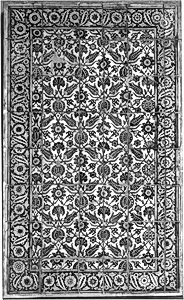
Medium
Stonepaste; painted and glazed
Dimensions
H. 74 1/2 in. (189.2 cm) W. 45 3/4 in. (116.2 cm)
Classification
Ceramics-Tiles
Department
Islamic Art
Museum
Metropolitan Museum of Art, New York, NY
Credit
Rogers Fund, 1923
Accession Number
23.12.1a–vv
Rights
Public Domain
Tags
Art Historical Context
This magnificent Tile Panel, created by an unknown artist in the half of the 16 century, exemplifies the exquisite ceramic artistry of the Islamic world. Crafted from stonepaste—a fine, white fritware body developed in the medieval Islamic Near East—it was painted underglaze in vibrant cobalt blue and other colors, then glazed to a lustrous sheen. Measuring an impressive 74½ by 45¾ inches, this large-scale panel was likely designed for architectural use, adorning the walls of mosques, palaces, or madrasas to create shimmering, light-reflecting surfaces. The intricate floral and leafy motifs, recurring themes in Islamic decoration, evoke the paradisiacal gardens promised in the Quran, symbolizing abundance, beauty, and the divine order of nature. Stonepaste's durability and ability to hold precise details made it ideal for such expansive, narrative panels, rivaling Chinese porcelain in finesse while adapting to local tastes. Produced during a golden age of Islamic ceramics under Safavid Persia or the Ottoman Empire, these tiles blended technical innovation with spiritual symbolism. Today, housed in the Metropolitan Museum of Art's Islamic Art department (acquired via the Rogers Fund in 1923), the panel invites visitors to appreciate how everyday materials transformed into transcendent art, bridging architecture and nature in enduring splendor.