
Tombak
Unknown Artist
late 19th century
Medium
Wood
Dimensions
Height: 16 in. (40.6 cm) Diameter: 10 in. (25.4 cm)
Classification
Membranophone-single-headed / goblet drum
Culture
Iranian
Department
Musical Instruments
Museum
Metropolitan Museum of Art, New York, NY
Credit
The Crosby Brown Collection of Musical Instruments, 1889
Accession Number
89.4.304
Rights
Public Domain
Art Historical Context
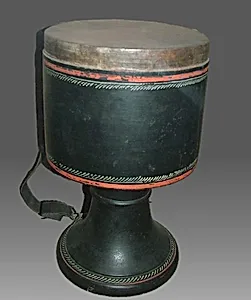
Nestled in the Metropolitan Museum Art's Department of Musical Instruments, thisak exemplifies the rich tradition of Iranian percussion from the late 19th. Crafted from wood by an unknown artist, the goblet-shaped drum stands 16 inches (40.6 cm) tall a 10-inch (25.4 cm) diameter, elegant, flared form designed for resonant sound production. As a single-headed membranophone, features a taut skin stretched over the wider mouth, a hallmark of Persian drumming instruments that allows skilled players to produce a spectrum of tones through intricate finger techniques. In Iranian culture, the Tombak holds a central place in classical music ensembles, accompanying singers and stringed instruments like the santur or setar. Its wooden body, likely turned or carved on a lathe, reflects the artisanal precision of late 19th-century Persian craftsmanship, where form harmonizes with function for both auditory and aesthetic appeal. Part of The Crosby Brown Collection acquired in 1889, this piece offers a tangible link to Iran's musical heritage, inviting visitors to imagine the rhythmic pulse of traditional performances in bustling teahouses or royal courts. (198 words)