
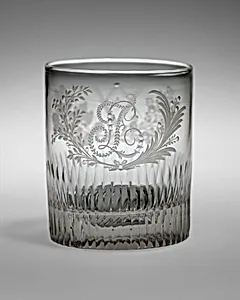
Tumbler
ca. 1825–30
Medium
Blown, cut, and engraved glass; clay cameo
Dimensions
H. 3 1/2 in. (8.9 cm); Diam. 3 1/16 in. (7.8 cm)
Classification
Tumbler
Culture
American
Department
The American Wing
Museum
Metropolitan Museum of Art, New York, NY
Credit
Purchase, Cylia Gindi Siedenburg Gift and Friends of the American Wing Fund, 2001
Accession Number
2001.94
Rights
Public Domain
Tags
Art Historical Context
This elegant tumbler, crafted by the esteemed Pittsburgh glasshouse Bakewell, Page &well around 1825–30, exemplifies early American glassmaking prowess. Standing just 3½ inches tall, this delicate drinking vessel was produced during a burgeoning era of U.S. manufacturing, when firms like Bakewell's competed with European imports by innovating affordable luxury tableware. Its presence in The American Wing at the Metropolitan Museum of Art highlights the rising sophistication of American decorative arts post-Independence. The tumer's medium—blown, cut, and engraved glass combined with a clay cameo—showcases virtuoso techniques. Blown glass formed the fluid shape, while precise cutting created sparkling facets to catch candlelight, mimicking pricier crystal. Engraving added intricate patterns, and the rare clay cameo likely embeds a detailed relief, perhaps evoking classical motifs or portraits tied to the "Men" tag, blending fragility with narrative depth. Such hybrid methods elevated everyday objects into status symbols for genteel households. Acquired through a generous gift in 2001, this tumbler reflects America's cultural ambition: transforming raw Midwestern sand into refined heirlooms that rivaled British and Irish wares, fostering national pride in craftsmanship.