
Vase
Unknown Artist
probably 18th–19th century
Medium
Glass; blown, applied, painted, tooled on the pontil
Dimensions
H. 7 3/8 in. (18.7 cm) Max. Diam. 3 7/16 in. (8.8 cm)
Classification
Glass
Department
Islamic Art
Museum
Metropolitan Museum of Art, New York, NY
Credit
Edward C. Moore Collection, Bequest of Edward C. Moore, 1891
Accession Number
91.1.1540
Rights
Public Domain
Tags
Art Historical Context
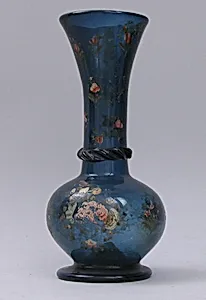
This elegant glass vase, likely created in the Islamic world during the 18th or 19th century, just 7⅜ inches tall with a maximum diameter of ⅜ inches, making it a refined table or decorative object. Crafted through skilled glassblowing techniques—blown into shape, with applied elements, painted details, and tooled finishes on the pontil mark showcases the artisan's precision. Delicate motifs of flowers and leaves adorn its surface, a hallmark of Islamic decorative traditions that celebrate nature's abundance. In Islamic art, such floral and leafy patterns often evoked paradisiacal gardens from religious and poetic imagery, transforming functional vessels into symbols of beauty and harmony. Glassmaking flourished across regions like the Ottoman Empire, Persia, and Syria during this era, blending utility with artistry through layered techniques that added texture and color without compromising the material's luminous quality. Now part of the Metropolitan Museum of Art's Islamic Art collection, this vase entered through the bequest of Edward C. Moore in 1891. It invites visitors to appreciate the anonymous maker's ingenuity, where everyday glassware became a canvas for cultural expression.