
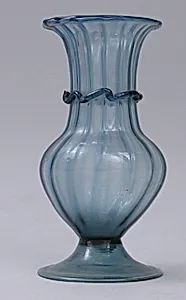
Vase
Unknown Artist
probably 18th–19th century
Medium
Glass; mold blown with applied decoration; tooled on the pontil
Dimensions
H. 5 5/8 in. (14.3 cm) Max. Diam 2 3/4 in. (7 cm)
Classification
Glass
Department
Islamic Art
Museum
Metropolitan Museum of Art, New York, NY
Credit
Edward C. Moore Collection, Bequest of Edward C. Moore, 1891
Accession Number
91.1.1545
Rights
Public Domain
Art Historical Context
This delicate glass vase, likely crafted in the 18th or 19th century, the refined artistry of Islamic glassmaking traditions. Hailing from the Islamic Art collection at The Metropolitan Museum of Art, stands just 5⅝ inches tall with a maximum diameter of ¾ inches, suggesting it may have served as a perfume, inkwell, or decorative vessel in a prosperous household. Such small-scale objects were prized in Ottoman, Persian, or regional workshops for their elegance and utility, reflecting a cultural appreciation for translucent beauty and everyday luxury. The vase's medium—mold-blown glass with applied decoration and tooled on the pontil—highlights masterful techniques passed down through generations of artisans. Mold-blowing created textured patterns by inflating molten glass into a patterned mold, while applied threads or trails added rhythmic decoration, often pinched or manipulated for visual flair. The pontil mark, tooled smooth at the base, reveals the hand of a skilled blower detaching the piece from the iron rod used in the furnace, a hallmark of pre-industrial glass production that speaks to the labor-intensive craft. Part of the Edward C. Moore Collection, bequeathed to the Met in 1891, this anonymous work preserves the ingenuity of Islamic craftsmen at a time when glassware bridged utility and ornament. Visitors can admire how its subtle iridescence and form capture the era's blend of function and finesse, inviting a closer look at history's shimmering remnants.