
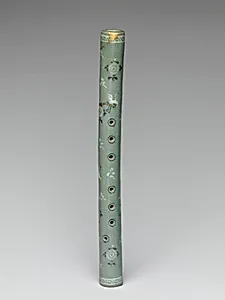
청자 상감 구름 학 국화 무늬 피리 고려|靑磁象嵌雲鶴菊花文笛 高麗|Vertical flute decorated with chrysanthemums, cranes, and clouds
Unknown Artist
early 13th century
Medium
Stoneware with inlaid design under celadon glaze
Dimensions
L. 14 3/8 in. (36.5 cm)
Classification
Ceramics
Culture & Period
Korea · Goryeo dynasty (918–1392)
Department
Asian Art
Museum
Metropolitan Museum of Art, New York, NY
Credit
Purchase, Friends of Asian Art Gifts, 2008
Accession Number
2008.71
Rights
Public Domain
Tags
About this artwork
Vertical flute decorated with chrysanthemums, cranes, and clouds is a ceramics from Korea, Goryeo dynasty (918–1392), dated to early 13th century. The work was created using stoneware with inlaid design under celadon glaze. It measures L. 14 3/8 in. (36.5 cm). This piece represents the artistic traditions of Korea, Goryeo dynasty (918–1392), embodying the aesthetic values and technical expertise of its makers. Ceramic arts during this period achieved remarkable sophistication in both form and de...
Art Historical Context
This exquisite vertical flute, crafted in the early 13th century Korea's Goryeo dynasty918–1392), the pinnacle of celadon ceramic artistry. Made from stoneware with intricate inlaid designs (known as *sanggam*) under luminous celadon glaze, it measures 14⅜ inches (36.5 cm) long. The jade-green glaze, prized for its subtle crackle and depth, reflects the era's technical mastery, where potters perfected high-fired stoneware to achieve both durability and elegance. The flute's surface blooms with auspicious motifs: graceful cranes symbolizing longevity and immortality, chrysanthemums evoking autumnal resilience and nobility, and swirling clouds suggesting heavenly realms. These inlaid white-slip designs, carved into the clay before glazing, highlight Goryeo potters' innovative *sanggam* technique—a Korean specialty that elevated decorative ceramics to sculptural poetry. Far from mere decoration, such pieces blended utility (as a playable instrument) with profound aesthetic and symbolic value. Acquired by the Metropolitan Museum of Art in 2008 through the Friends of Asian Art, this rare survivor embodies Goryeo's cultural zenith, when Buddhism and courtly refinement fueled artistic innovation. It invites visitors to appreciate how everyday objects became vessels of timeless beauty and spiritual aspiration.