
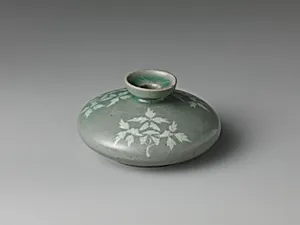
청자 상감 모란 무늬 기름병 고려|青磁 象嵌 牡丹文 油甁 高麗|Oil bottle decorated with peony leaves
Unknown Artist
second half 12th century
Medium
Stoneware with inlaid design under celadon glaze
Dimensions
H. 2 in. (5.1 cm); Diam. 3 3/4 in. (9.5 cm)
Classification
Ceramics
Culture & Period
Korea · Goryeo dynasty (918–1392)
Department
Asian Art
Museum
Metropolitan Museum of Art, New York, NY
Credit
Gift of R. H. Macy and Co., 1919
Accession Number
19.39.22
Rights
Public Domain
Art Historical Context
This delicate oil bottle, crafted during the second half of the 12th century in Korea's Goryeo dynasty (918–1392), exemplifies the era's mastery of celadon ceramics. Standing just 2 inches tall with a 3¾-inch diameter, its petite form suggests everyday use—likely for oils or cosmetics—yet its refined artistry elevates it to a treasured artifact. Housed in the Metropolitan Museum of Art's Asian Art department, it was a generous gift from R. H. Macy and Co. in 1919. The bottle's standout feature is its stoneware body adorned with inlaid peony leaf designs (sanggam technique) beneath a signature celadon glaze. Artisans carved motifs into the clay, filled them with white slip for contrast, and fired the piece under a crackle glaze that yields a soft, jade-green sheen. This innovative inlay method, peaking in Goryeo, allowed intricate patterns to emerge vividly after glazing, distinguishing Korean celadons from Chinese predecessors. Peonies, symbols of prosperity and nobility in East Asian culture, reflect Goryeo's Buddhist-influenced aesthetic and aristocratic tastes. Such vessels highlight the dynasty's ceramic innovation, blending utility with poetic elegance for both domestic and ritual life.