
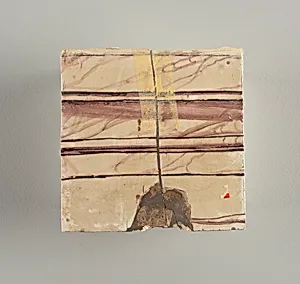
Wall facing
ca. 1725
Medium
tiles
Classification
tiles
Department
Smithsonian Collection
Museum
Smithsonian American Art Museum
Credit
Gift of William Randolph Hearst
Accession Number
1926-43-7-b-141
Rights
Public Domain
About this artwork
Research in Progress
Art Historical Context
This exquisite "Wall Facing," dating to around 1725, is a captivating example of early 18th-century tile from the Smithsonian American Art Museum's collection. Craft as a decorative wall panel, these tiles represent the artistry of an unknown maker during the colonial era, when such pieces adorned hearths, chimneys, and interior walls in affluent American homes. Imported or locally produced in styles influenced by European traditions like Dutch Delft, tiles like these served both functional and ornamental purposes, shielding surfaces from heat while adding vibrant color and pattern to everyday spaces. The medium's significance lies in its durability and versatility—fired clay glazed for weather resistance and intricate designs—making it a luxury accessible mainly to the elite. This panel, classified simply as "tiles," evokes the craftsmanship of a time when home decoration reflected social status and transatlantic trade networks. Its presence in the Smithsonian Collection underscores the evolution of American decorative arts. Generously gifted by newspaper magnate and avid collector William Randolph Hearst, whose eclectic tastes spanned continents and eras, the piece highlights the enduring allure of colonial artifacts. Ongoing research promises to uncover more about its origins, inviting visitors to ponder its untold stories amid the museum's treasures.
About the Artist
Unknown
The artist designated as "Unknown" in our virtual museum's collection exemplifies a poignant chapter in art history: creators whose identities have faded into obscurity despite the enduring power of their work. With only one known artwork attributed to them in our holdings, this figure represents countless anonymous hands that shaped visual culture across centuries. Museums worldwide, including th...